Tuesday, 9 December 2014

Full Stylistic Analysis of "The Legend of Sleepy Hollow"

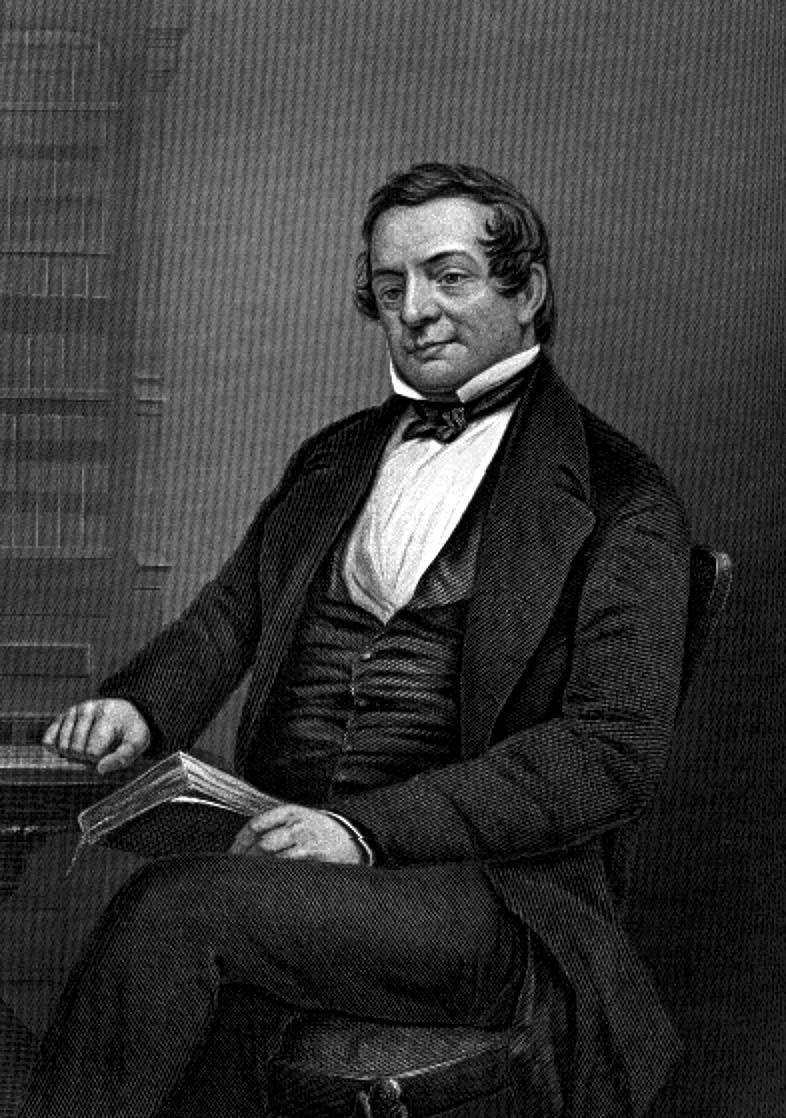
The story under consideration “The Legend of Sleepy Hollow” is written byWashington Irving. The author is a famous  American writer who achieved international fame for his fictional works, including the stories Rip Van Winkleand The Legend of Sleepy Hollow, as well as for his biographies and historical writings. Although he became a best-selling author, he never really fully developed as a literary talent, he has retained his reputation as the first American man of letters. Irving also advocated for writing as a legitimate career, and argued for stronger laws to protect writers from copyright infringement.
“The Legend of Sleepy Hollow”  is  the story of Ichabod Crane, a sycophantic, lean, lanky, and extremely superstitious schoolmaster from Connecticut, who competes with Abraham "Brom Bones" Van Brunt, the town rowdy, for the hand of 18-year-old Katrina Van Tassel, the daughter and sole child of a wealthy farmer, Baltus Van Tassel. As Crane leaves a party he attended at the Van Tassel home on an autumn night, he is pursued by the Headless Horseman, who is supposedly the ghost of a Hessian trooper who had his head shot off by a stray cannonball during "some nameless battle" of the American Revolutionary War, and who "rides forth to the scene of battle in nightly quest of his head". Ichabod mysteriously disappears from town, leaving Katrina to marry Brom Bones, who was "to look exceedingly knowing whenever the story of Ichabod was related". Although the nature of the Headless Horseman is left open to interpretation, the story implies that the Horseman was really Brom Bones in disguise.
The story is set in the small Dutch village, untouched by the outside world, in 1790. It was a …” small market town or rural port, which by some is called Greensburgh, but which is more generally and properly known by the name of Tarry Town.  This name was given, we are told, in former days, by the good housewives of the adjacent country, from the inveterate propensity of their husbands to linger about the village tavern on market days…” The setting of the story is realistic. It is presented in detailed way. It provides the background for action and contributes to our understanding of characters :“…from the listless repose of the place, and the peculiar character of its inhabitants, who are descendants from the original Dutch settlers, this sequestered glen has long been known by the name of Sleepy Hollow, and its rustic lads are called the Sleepy Hollow Boys throughout all the neighboring country. A drowsy, dreamy influence seems to hang over the land, and to pervade the very atmosphere…”
From the point of view of presentation, the story is the 3rd person narrative.
The characters we meet in the story under analysis are Ichabod Crane, Brom Bones, Katrina Van Tassel, The Headless Horseman and other citizens of the Sleepy Hollow. The writer reveals Ichabod Crane through his appearance, actions and preferences.     He was a "... native of Connecticut, a State which supplies the Union with pioneers for the mind as well as for the forest, and sends forth yearly its legions of frontier woodmen and country schoolmasters.  The cognomen of Crane was not inapplicable to his person.  He was tall, but exceedingly lank, with narrow shoulders, long arms and legs, hands that dangled a mile out of his sleeves, feet that might have served for shovels, and his whole frame most loosely hung together.  His head was small, and flat at top, with huge ears, large green glassy eyes, and a long snipe nose, so that it looked like a weather-cock perched upon his spindle neck to tell which way the wind blew..."
Ichabod Crane is an anti-hero in that he is the tale’s protagonist and has some good qualities, but his serious character flaws make him not admirable—and these flaws will doom him. He is a schoolmaster, but he does not seem particularly interested in his students, and he is only well-educated relative to the others in the town, having finished a few books. The only one he seems to focus on is Cotton Mather’s History of New England Witchcraft. He is obsessed with the supernatural apart from religious faith, despite his learning. This in itself is not enough to make him foolish, but he fails to realize that he is the agent of his own undoing in that he makes himself scared just to walk home at night. One of his sources of pleasure was "...to pass the long winter evenings with the old Dutch wives… listening to their marvelous tales of ghosts and goblins…"
He was a huge feeder, and according to country custom… boarded and lodged at the houses of farmers whose children he instructed. Ichabod had a soft and foolish heart, and it was not a wonder that such a tempting woman soon found favor in his eyes. When it came to his rival, Brom Bones, Ichabod had a happy mixture of pliability and perseverance in his nature, yet still became the object of whimsical persecution to Bones and his gang of rough riders.
Brom Bones was introduced as was a burly, roaring, roistering blade of the name of Abraham. He was broad shouldered and double-jointed, with short, curly black hair and a bluff but not unpleasant countenance, having a mingled air of fun and arrogance. From his Herculean frame and great powers of limb, he received the nickname Brom Bones, by which he was universally known. He was foremost at all races. He was always ready for either a fight or a frolic, but had more mischief than ill will in his composition; and with all his overbearing roughness, there was a strong dash of waggish good humor at bottom. He had three or four boon companions who regarded him as their model and at the head of whom he scoured the country, attending every scene of feud or merriment for miles around.
This reckless hero had for some time singled out the blooming Katrina for the object of his gallantries.
Katrina Van Tassel was a daughter and only child of a prosperous Dutch farmer. She was a blooming lass of fresh eighteen; plump as a partridge; ripe an melting and rosy cheeked as one of her father’s peaches; and universally famed, not merely as a beauty, but as an heiress. She was a little of a coquette, as might be perceived even in her dress, which was a mixture of ancient and modern fashions,as most suited to set off her charms. She wore the ornaments of pure yellow gold, which her great-great-grandmother had brought over from Saardam; the tempting stomacher of the olden time, and withal a provokingly short petticoat, to display the prettiest foot and ankle in the country round.
The Headless Horseman was depicted by Irving as “…the dominant spirit, however, that haunts this enchanted region, and seems to be commander-in-chief of all the powers of the air, is the apparition of a figure on horseback, without a head. It is said by some to be the ghost of a Hessian trooper, whose head had been carried away by a cannon-ball, in some nameless battle during the Revolutionary War, and who is ever and anon seen by the country folk hurrying along in the gloom of night, as if on the wings of the wind. His haunts are not confined to the valley, but extend at times to the adjacent roads, and especially to the vicinity of a church at no great distance. Indeed, certain of the most authentic historians of those parts, who have been careful in collecting and collating the floating facts concerning this spectre, allege that the body of the trooper having been buried in the churchyard, the ghost rides forth to the scene of battle in nightly quest of his head, and that the rushing speed with which he sometimes passes along the Hollow, like a midnight blast, is owing to his being belated, and in a hurry to get back to the churchyard before daybreak. Such is the general purport of this legendary superstition, which has furnished materials for many a wild story in that region of shadows; and the spectre is known at all the country firesides, by the name of the Headless Horseman of Sleepy Hollow…”
The plot of the story runs as follows: 1) exposition (description of Sleepy Hollow, introduction of main and additional characters, presenting myths and beliefs of the citizens); 2) rising action (the author tells about Ichabod’s dreams about rich life what could be granted after the marriage with Katrina Van Tassel, but his rival Brom Bones has also chosen the young lady for his gallantries, here comes the romantic conflict); 3) climax (Ichabod gets rejected by Katrina and while riding home is pursued by the Headless Horseman);           4) anticlimax ( after Ichabod disappears, no one makes fuss about it; Brom Bones and Katrina Van Tassel are getting married and the town gets back to its ordinary rural life).
In order to portray the characters and to portray the setting vividly and convincingly the author of the story resorts to the following stylistic devices:
I. Irony Irving made fun of Ichabod’s way of living, ridiculed his passion for scary stories, his “animal appetite”, even his school, where our hero felt as a king: …”Ichabod, in pensive mood, sat enthroned on the lofty stool from whence he usually watched all the concerns of his little literary realm. In his hand he swayed a ferule, that sceptre of despotic power; the birch of justice reposed on three nails behind the throne, a constant terror to evil doers, while on the desk before him might be seen sundry contraband articles and prohibited weapons, detected upon the persons of idle urchins, such as half-munched apples, popguns, whirligigs, fly-cages, and whole legions of rampant little paper gamecocks…” In addition, the author ironically described women : “All these, however, were mere terrors of the night, phantoms of the mind that walk in darkness; and though he had seen many spectres in his time, and been more than once beset by Satan in divers shapes, in his lonely perambulations, yet daylight put an end to all these evils; and he would have passed a pleasant life of it, in despite of the Devil and all his works, if his path had not been crossed by a being that causes more perplexity to mortal man than ghosts, goblins, and the whole race of witches put together, and that was—a woman”.
Furthermore, Irving mocks at the rural life of that time: ” …the most enviable and admirable house in the village appears to be festooned with dried apples, peaches and red peppers and decorated with shining conch-shells, colored bird's eggs and a great ostrich egg …hung from the center of the room”.
As a vivid example of irony I would like to mention the Ichabod’s dance at Van Tassel’s house: “he was clattering about the room  in such a way that you would have thought Saint Vitus himself… was figuring before you…”
II. Metaphors “As Ichabod approached this fearful tree, he began to whistle; he thought his whistle was answered; it was but a blast sweeping sharply through the dry branches”. ("sweeping" is a metaphor; it compares the sound of the wind to the sound of a broom)
“His terror rose to desperation; he rained a shower of kicks and blows upon Gunpowder, hoping by a sudden movement to give his companion the slip; but the spectre started full jump with him”. (Ichabod's kicking of the horse is compared to a violent raindstorm.)
III. Similies 1. “The hour was as dismal as himself”. (the hour is personified or compared to a person as "dismal" as Ichabod Crane after he leaves the party, having been bested by Bram Bones)
2. “Now and then, too, the long-drawn crowing of a cock, accidentally awakened, would sound far, far off, from some farmhouse away among the hills—but it was like a dreaming sound in his ear”. (the unreality of the sound is compared to a dream)
3. “Icabod had a long snipe nose, so that it looked like a weather-cock perched upon his spindle neck”.
4. "The guttural twang of a bull frog, from a neighbouring marsh, as if sleeping uncomfortably, and turning suddenly in his bed".
IV.  Personification Describing a cock, as “a husband, a warrior, and a fine gentleman”.
"And how often was he thrown into complete dismay by some rushing blast, howling among the trees..."
V. Allusions “From his Herculean frame and great powers of limb he had received the nickname of BROM BONES”; “To have taken the field openly against his rival would have been madness; for he was not a man to be thwarted in his amours, any more than that stormy lover, Achilles”; It was suddenly interrupted by the appearance of a negro in tow-cloth jacket and trowsers, a round-crowned fragment of a hat, like the cap of Mercury, and mounted on the back of a ragged, wild, half-broken colt, which he managed with a rope by way of halter”; and haunted bridges, and haunted houses, and particularly of the headless horseman, or Galloping Hessian(historic reference)  of the Hollow, as they sometimes called him”.

Summing up the analysis of the given extract one should say that the writer Washington Irving brilliantly uses irony and humor to create graceful, light and natural prose. Irony is a recurring feature in Washington Irving's writings, but maybe never so noticeably as in pseudo-supernatural stories. The author appears to be not only a keen word-lover but also a gifted ironist, who uses all the possible literature devices to create the atmosphere full of action in his witty and light romantic stories.

Sunday, 30 November 2014

The Stylistic Devices

The skillful usage of irony and satire by the author made me impressed. Irving used tragic irony to boost the comic effect. 
Ichabod is depicted ironically from various sides. To begin with, I would like to mention his appearance. He is described as  “…tall, but exceedingly lank, with narrow shoulders, long arms and legs, hands that dangled a mile out of his sleeves, feet that might have served for shovels, and his whole frame most loosely hung together.
His head was small, and flat at top, with huge ears, large green glassy eyes, and a long snipe nose, so that it looked like a weather-cock perched upon his spindle neck to tell which way the wind blew...”
Irving made fun of Ichabod’s way of living, ridiculed his passion for scary stories, his “animal appetite”, even his school, where our hero felt as a king: …”Ichabod, in pensive mood, sat enthroned on the lofty stool from whence he usually watched all the concerns of his little literary realm. In his hand he swayed a ferule, that sceptre of despotic power; the birch of justice reposed on three nails behind the throne, a constant terror to evil doers, while on the desk before him might be seen sundry contraband articles and prohibited weapons, detected upon the persons of idle urchins, such as half-munched apples, popguns, whirligigs, fly-cages, and whole legions of rampant little paper gamecocks…”
So, definitely, stylistic devices were used in proper way, and, frankly speaking, they boost the reader’s interest to follow the story. Unfortunately, I was not able to demonstrate all the examples of irony, used in the story, I just wanted to draw the attention to the most interesting and vivid ones.

The Characters of the Story


Ichabod Crane may be called  a protagonist of the story. He was a "... native of Connecticut, a State which supplies the Union with pioneers for the mind as well as for the forest, and sends forth yearly its legions of frontier woodmen and country schoolmasters.  The cognomen of Crane was not inapplicable to his person.  He was tall, but exceedingly lank, with narrow shoulders, long arms and legs, hands that dangled a mile out of his sleeves, feet that might have served for shovels, and his whole frame most loosely hung together.  His head was small, and flat at top, with huge ears, large green glassy eyes, and a long snipe nose, so that it looked like a weather-cock perched upon his spindle neck to tell which way the wind blew..." 
Crane was a school teacher, and I should say, a successful one. One of his sources of pleasure was "...to pass the long winter evenings with the old Dutch wives… listening to their marvelous tales of ghosts and goblins…" Furthermore, he adored food and everything, connected with eating.
On the one hand I can say that Ichabod was a comic character, but from the other- he was a tragic one. The funniest thing connected with him was love to the daughter of the rich farmer- Katrina Van Tassel, and, of course, his rivalry with Brom Bones for the heart of "The Beloved Mistress". I liked the notion of the "Love Triangle" and in the story it was vividly depicted. Of course, I don't agree with all the actions of the characters, because some of them were smart and  some carried absolute failure, but it was interesting to read the "Legend of Sleepy Hollow" because of it's comic effect.

Thursday, 27 November 2014

The Plot of the Story

Ichabod Crane, an itinerant school teacher from Connecticut, falls for Katrina Van Tassel, the pretty daughter of a prosperous local family. Ichabod’s gangling appearance and odd habits was the main reason to compete with Abraham "Brom Bones" Van Brunt.Tension builds between Brom and Ichabod until one dark autumn night when Ichabod, riding along a lonely wooded road, finds himself with a ghostly headless companion. Headless Horseman, who is supposedly the ghost of a Hessian trooper who had his head shot off by a stray cannonball during "some nameless battle" of the American Revolutionary War, and who "rides forth to the scene of battle in nightly quest of his head".
The next day Ichabod mysteriously disappears from town, but the villagers discover his horse and the remains of a pumpkin, leaving Katrina to marry Brom Bones.

The Setting of the Story

The story is set in the small "ancient Dutch" village, untouched by the outside world, in 1790. It was a …” small market town or rural port, which by some is called Greensburgh, but which is more generally and properly known by the name of Tarry Town.  This name was given, we are told, in former days, by the good housewives of the adjacent country, from the inveterate propensity of their husbands to linger about.  
And then Irving continues and describes the town itself and, particularly, the way of life of it’s inhabitants “…From the listless repose of the place, and the peculiar character of its inhabitants, who are descendants from the original Dutch settlers, this sequestered glen has long been known by the name of SLEEPY HOLLOW, and its rustic lads are called the Sleepy Hollow Boys throughout all the neighboring country. A drowsy, dreamy influence seems to hang over the land, and to pervade the very atmosphere…” 
To my mind, these lines reveal the setting of the story in the best manner.


Great minds have purposes; others have wishes by Washington Irving

I've decided to name this note as one of the famous Irving`s quote. Why? Probably, this one can describe him only in one sentence. I feel certain that this quote shows his personality, aspirations and credo. Washington Irving went down in history as American essayist, historian, and author wrote "The Legend of Sleepy Hollow". So, let`s get to the bottom of Irving`s life.

One of the first noted American authors to be highly acclaimed in Europe during his life time, Irving was a prolific author of fiction and non-. He wrote numerous short stories, biographies, histories, and tales of his travels. His characters Ichabod Crane and Rip van Winkle are now icons of popular American culture, and many of Irving's works have inspired adaptations to the stage and film.
Named in honor of American President George Washington, under whom the United States gained independence during the American Revolution, Washington Irving was born on 3 April 1783 in New York. He was the eleventh child born to emigrants Sarah Sanders and William Irving, deacon and successful merchant. The Irving's were kind, charitable people and often tended to those left less fortunate after the war. Washington, while born sickly, was a mischievous and adventuresome young man, sneaking out at night to attend plays and frustrating his pious parents, especially his father. He roamed the city and environs, dreaming of far-off places--dreams that were partly fueled by one of his favorite books, Daniel Defoe's Robinson Crusoe. Travelling would become a life-long passion. Although he was not an avid student, he studied law and became a clerk in Josiah Ogden Hoffman's law office. The Hoffmans would become great friends to Irving.
Suffering from ill-health off and on for many years, in 1804 Irving set sail from New York Harbour, the first of many trips abroad: he was going to a spa in Bordeaux, France to treat a lung ailment. He learned French and, always gregarious, made many friends who were charmed by his easy-going ways. For the next two years he travelled through many countries in Europe including France, the Netherlands, Spain, Scotland, Wales, and England. Ever the flâneur, he basked in the hospitality of sophisticated European society and indulged his love of art, theatre, and opera. But his Grand Tour was to come to an end when, in 1806 and restored health, he returned to America and was called to the bar.
Irving's social life continued to dominate his days. He was not interested in practicing law, preferring the companionship of his male friends and the flirtatious affections of ladies. In a foreshadowing of great things to come, he collaborated with his brother William and James Kirke Paulding in creating a semi-monthly periodical to compete with the more sombre news publications of the day. While it was short-lived The Salmagundi Papers; or, the Whim-Whams and Opinions of Laucelot Langstaff, Esq. And Others. (1809) was met with great success. The Jonathan Swift-like satire and tongue-in-cheek pokes at politics, culture, and society was "to instruct the young, reform the old, correct the town, and castigate the age." In a similar vein Irving composed his first novel, Knickerbocker's History of New York (1809). A burlesque and comprehensive weaving of fact and fiction, his "History of New-York from the Beginning of the World to the End of the Dutch Dynasty" is narrated by Diedrich Knickerbocker and won Irving much acclaim at home and abroad.
During the War of 1812, Irving was beset with ennui. Initially he had begrudgingly enlisted but his patriotism flared with the burning of the capitol; he also served as governors' aid and military secretary for a time. In 1815 he left America for England to visit his brother but remained for the next seventeen years, again travelling to various countries in Europe. While in England, an unsuccessful business venture with his brothers caused him to turn to his pen in hopes of providing some income. Irving's short stories, first printed in America under his pseudonym Geoffrey Crayon between the years 1819-20 were collected in The Crayon Papers and The Sketch Book of Geoffrey Crayon. They contain two of Irvings' most famous tales: "Rip van Winkle" and "The Legend of Sleepy Hollow". These stories were wildly popular in America and soon too in Europe where Irving, or, Geoffrey Crayon, was welcomed by noted society and literary figures including actors, writers, artists, Dukes, and Lords, Kings and Queens. Positive reviews were published and Charles Dickens, Samuel Taylor Coleridge, Lord George Gordon Byron, and his friend Sir Walter Scott lauded his humorous and witty style.
Irving's health failed again and for many months he was unable to walk, but it did not stop him from continuing to write. His next novel was Bracebridge Hall, or, The Humorists, A Medley (1822). It was followed by Tales of a Traveller (1824), which Irving considered one of his finer works. In 1826 Irving moved to Madrid, Spain, where he set to writing his highly lauded The Life and Voyages of Christopher Columbus (1828), Chronicle of the Conquest of Granada (1829), and Tales of the Alhambra (1832).
In 1832 Irving returned to America, greeted by his overwhelmingly adoring readership. With the intent of creating a secluded retreat for writing, he bought a farm on the banks of the Hudson River at Tarrytown in New York State. The little Dutch cottage and the picturesque views was soon transformed into the now famous residence "Sunnyside". Irving the bachelor was surrounded by loving friends and relatives, and apart from his sojourn as Minister to Spain in 1842-48, his days of living abroad were over.

Abbotsford and Newstead Abbey (1835) was followed by Astoria: Anecdotes of an enterprise beyond the Rocky Mountains (1836). "....I have felt anxious to get at the details of their adventurous expeditions among the savage tribes that peopled the depths of the wilderness." It explores Irving's impressions from travels in Canada and America as guest of John Jacob Astor's Northwest Fur Company. Irving expresses his sympathy to the displaced, and dispossessed 'savage' Native American Peoples in such stories as "Philip of Pokanoket", "Traits of Indian Character", and "Origin of the White, the Red, and the Black Men". The Adventures of Captain Bonneville (1837) was followed by Irving's biographical works Oliver Goldsmith: A Biography (1850) and Lives of Mahomet and his Successors (1850). Wolfert's Roost and Miscellanies (1855) includes short stories first published in Knickerbocker Magazine. Irving's last finished work, something he had been working on for many years but kept putting aside for other more pressing projects is his Life of George Washington (1859). Washington Irving died on 28 November 1859 and now rests in the Sleepy Hollow Cemetery overlooking the Old Dutch Church in Tarrytown, New York.

Biography written by C. D. Merriman for Jalic Inc. Copyright Jalic Inc. 2007. All Rights Reserved. Taken from: http://www.online-literature.com/irving/

The Secret of Slelpy Hollow

I`ve just read a marvelous short story “The Legend of Sleepy Hollow” by Washington Irving. The author, American essayist and historian, tells astonishing story of Ichabod Crane, who was a school teacher. The small town was full of strange, mystic thing and events. Maybe, it had some elegant charm because of it humor, irony and, of course, supernatural stories. Ichabod enjoys hearing the tales and his job as a teacher allows him to spend a lot of time in the various households. Ichabod falls in love with Katrina Van Tassel, who happens to be the only daughter of one of the wealthier farmers in the town. Ichabod ends up in competition with Brom Van Brunt, who is also in love with Katrina.
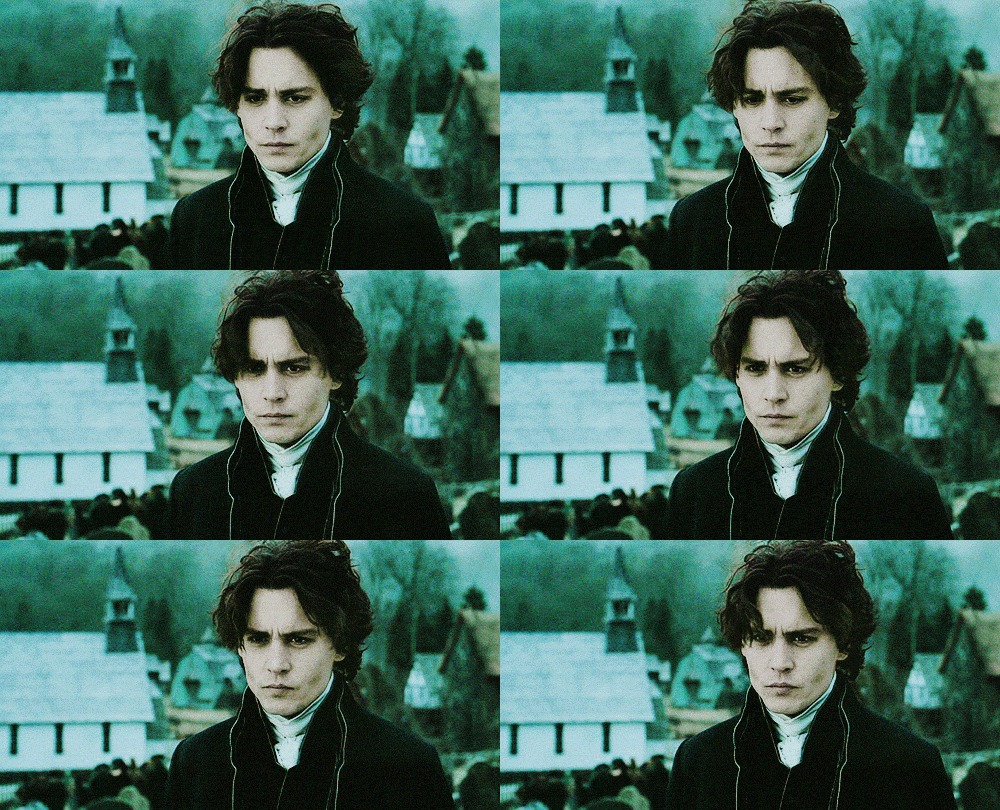
A few years ago I had a pleasure to enjoy the movie by Tim Burton, featuring Johny Depp as Ichabod Crane. But the original story and the one, presented by Burton are absolutely different.