I've
decided to name this note as one of the famous Irving`s quote. Why? Probably,
this one can describe him only in one sentence. I feel certain that this
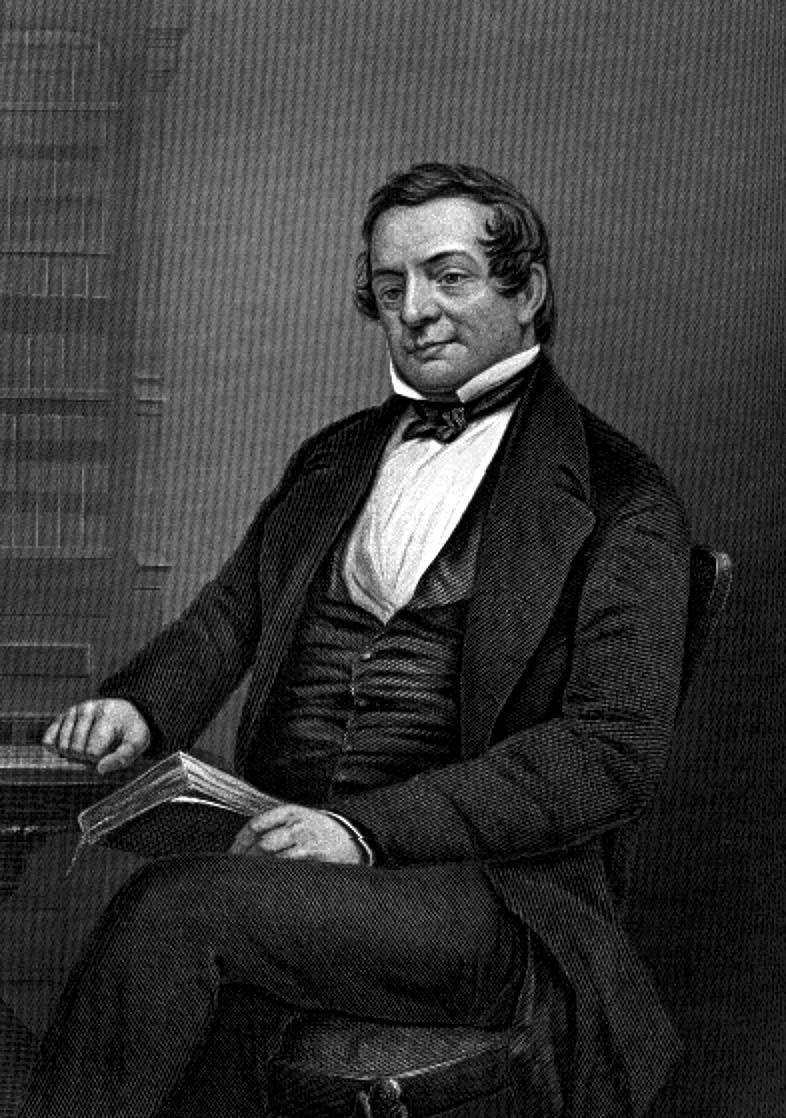
quote shows his personality, aspirations and credo. Washington Irving went down
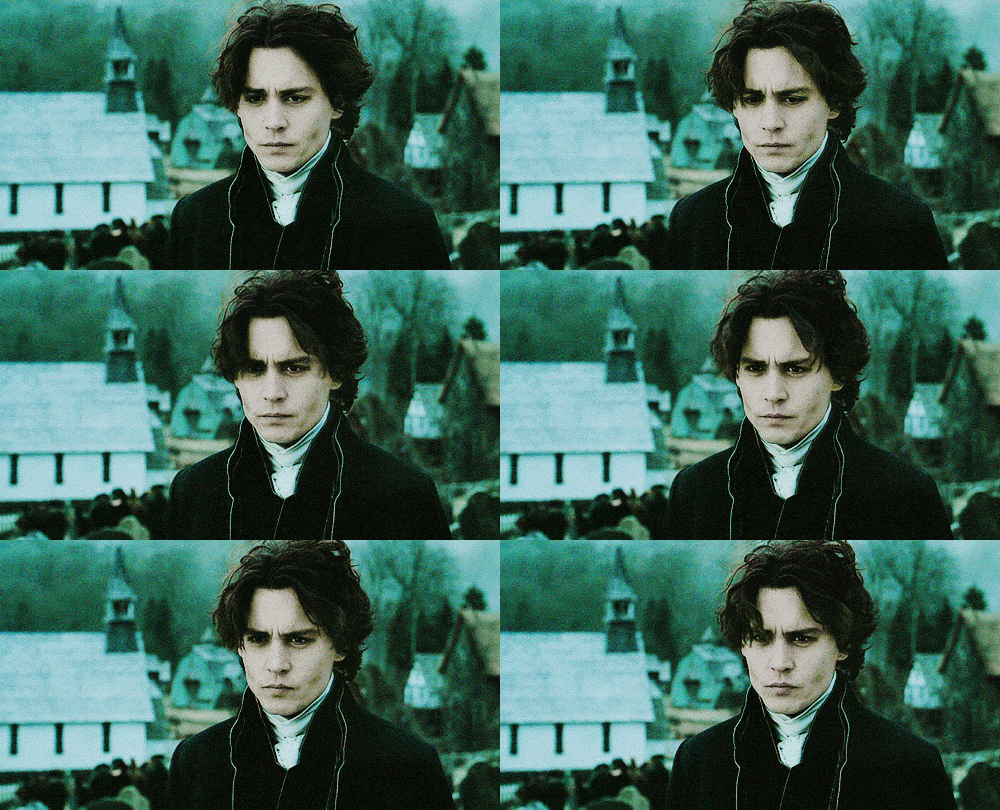
in history as American essayist, historian, and author wrote "The Legend
of Sleepy Hollow". So, let`s get to the bottom of Irving`s life.
I've
decided to name this note as one of the famous Irving`s quote. Why? Probably,
this one can describe him only in one sentence. I feel certain that this
quote shows his personality, aspirations and credo. Washington Irving went down
in history as American essayist, historian, and author wrote "The Legend
of Sleepy Hollow". So, let`s get to the bottom of Irving`s life.
One
of the first noted American authors to be highly acclaimed in Europe during his
life time, Irving was a prolific author of fiction and non-. He wrote numerous
short stories, biographies, histories, and tales of his travels. His characters
Ichabod Crane and Rip van Winkle are now icons of popular American culture, and
many of Irving's works have inspired adaptations to the stage and film.
Named
in honor of American President George Washington, under whom the United States
gained independence during the American Revolution, Washington Irving was born
on 3 April 1783 in New York. He was the eleventh child born to emigrants Sarah
Sanders and William Irving, deacon and successful merchant. The Irving's were
kind, charitable people and often tended to those left less fortunate after the
war. Washington, while born sickly, was a mischievous and adventuresome young
man, sneaking out at night to attend plays and frustrating his pious parents,
especially his father. He roamed the city and environs, dreaming of far-off
places--dreams that were partly fueled by one of his favorite books, Daniel
Defoe's Robinson Crusoe. Travelling would become a life-long passion. Although
he was not an avid student, he studied law and became a clerk in Josiah Ogden
Hoffman's law office. The Hoffmans would become great friends to Irving.
Suffering
from ill-health off and on for many years, in 1804 Irving set sail from New
York Harbour, the first of many trips abroad: he was going to a spa in
Bordeaux, France to treat a lung ailment. He learned French and, always
gregarious, made many friends who were charmed by his easy-going ways. For the
next two years he travelled through many countries in Europe including France,
the Netherlands, Spain, Scotland, Wales, and England. Ever the flâneur, he
basked in the hospitality of sophisticated European society and indulged his
love of art, theatre, and opera. But his Grand Tour was to come to an end when,
in 1806 and restored health, he returned to America and was called to the bar.
Irving's
social life continued to dominate his days. He was not interested in practicing
law, preferring the companionship of his male friends and the flirtatious
affections of ladies. In a foreshadowing of great things to come, he
collaborated with his brother William and James Kirke Paulding in creating a
semi-monthly periodical to compete with the more sombre news publications of
the day. While it was short-lived The Salmagundi Papers; or, the Whim-Whams and
Opinions of Laucelot Langstaff, Esq. And Others. (1809) was met with great
success. The Jonathan Swift-like satire and tongue-in-cheek pokes at politics,
culture, and society was "to instruct the young, reform the old, correct
the town, and castigate the age." In a similar vein Irving composed his
first novel, Knickerbocker's History of New York (1809). A burlesque and
comprehensive weaving of fact and fiction, his "History of New-York from
the Beginning of the World to the End of the Dutch Dynasty" is narrated by
Diedrich Knickerbocker and won Irving much acclaim at home and abroad.
During
the War of 1812, Irving was beset with ennui. Initially he had begrudgingly
enlisted but his patriotism flared with the burning of the capitol; he also
served as governors' aid and military secretary for a time. In 1815 he left
America for England to visit his brother but remained for the next seventeen
years, again travelling to various countries in Europe. While in England, an
unsuccessful business venture with his brothers caused him to turn to his pen
in hopes of providing some income. Irving's short stories, first printed in
America under his pseudonym Geoffrey Crayon between the years 1819-20 were
collected in The Crayon Papers and The Sketch Book of Geoffrey Crayon. They
contain two of Irvings' most famous tales: "Rip van Winkle" and
"The Legend of Sleepy Hollow". These stories were wildly popular in
America and soon too in Europe where Irving, or, Geoffrey Crayon, was welcomed
by noted society and literary figures including actors, writers, artists,
Dukes, and Lords, Kings and Queens. Positive reviews were published and Charles
Dickens, Samuel Taylor Coleridge, Lord George Gordon Byron, and his friend Sir
Walter Scott lauded his humorous and witty style.
Irving's
health failed again and for many months he was unable to walk, but it did not
stop him from continuing to write. His next novel was Bracebridge Hall, or, The
Humorists, A Medley (1822). It was followed by Tales of a Traveller (1824),
which Irving considered one of his finer works. In 1826 Irving moved to Madrid,
Spain, where he set to writing his highly lauded The Life and Voyages of
Christopher Columbus (1828), Chronicle of the Conquest of Granada (1829), and
Tales of the Alhambra (1832).
In
1832 Irving returned to America, greeted by his overwhelmingly adoring
readership. With the intent of creating a secluded retreat for writing, he
bought a farm on the banks of the Hudson River at Tarrytown in New York State.
The little Dutch cottage and the picturesque views was soon transformed into
the now famous residence "Sunnyside". Irving the bachelor was
surrounded by loving friends and relatives, and apart from his sojourn as
Minister to Spain in 1842-48, his days of living abroad were over.
Abbotsford
and Newstead Abbey (1835) was followed by Astoria: Anecdotes of an enterprise
beyond the Rocky Mountains (1836). "....I have felt anxious to get at the
details of their adventurous expeditions among the savage tribes that peopled
the depths of the wilderness." It explores Irving's impressions from
travels in Canada and America as guest of John Jacob Astor's Northwest Fur
Company. Irving expresses his sympathy to the displaced, and dispossessed
'savage' Native American Peoples in such stories as "Philip of Pokanoket",
"Traits of Indian Character", and "Origin of the White, the Red,
and the Black Men". The Adventures of Captain Bonneville (1837) was
followed by Irving's biographical works Oliver Goldsmith: A Biography (1850)
and Lives of Mahomet and his Successors (1850). Wolfert's Roost and
Miscellanies (1855) includes short stories first published in Knickerbocker
Magazine. Irving's last finished work, something he had been working on for
many years but kept putting aside for other more pressing projects is his Life
of George Washington (1859). Washington Irving died on 28 November 1859 and now
rests in the Sleepy Hollow Cemetery overlooking the Old Dutch Church in
Tarrytown, New York.